
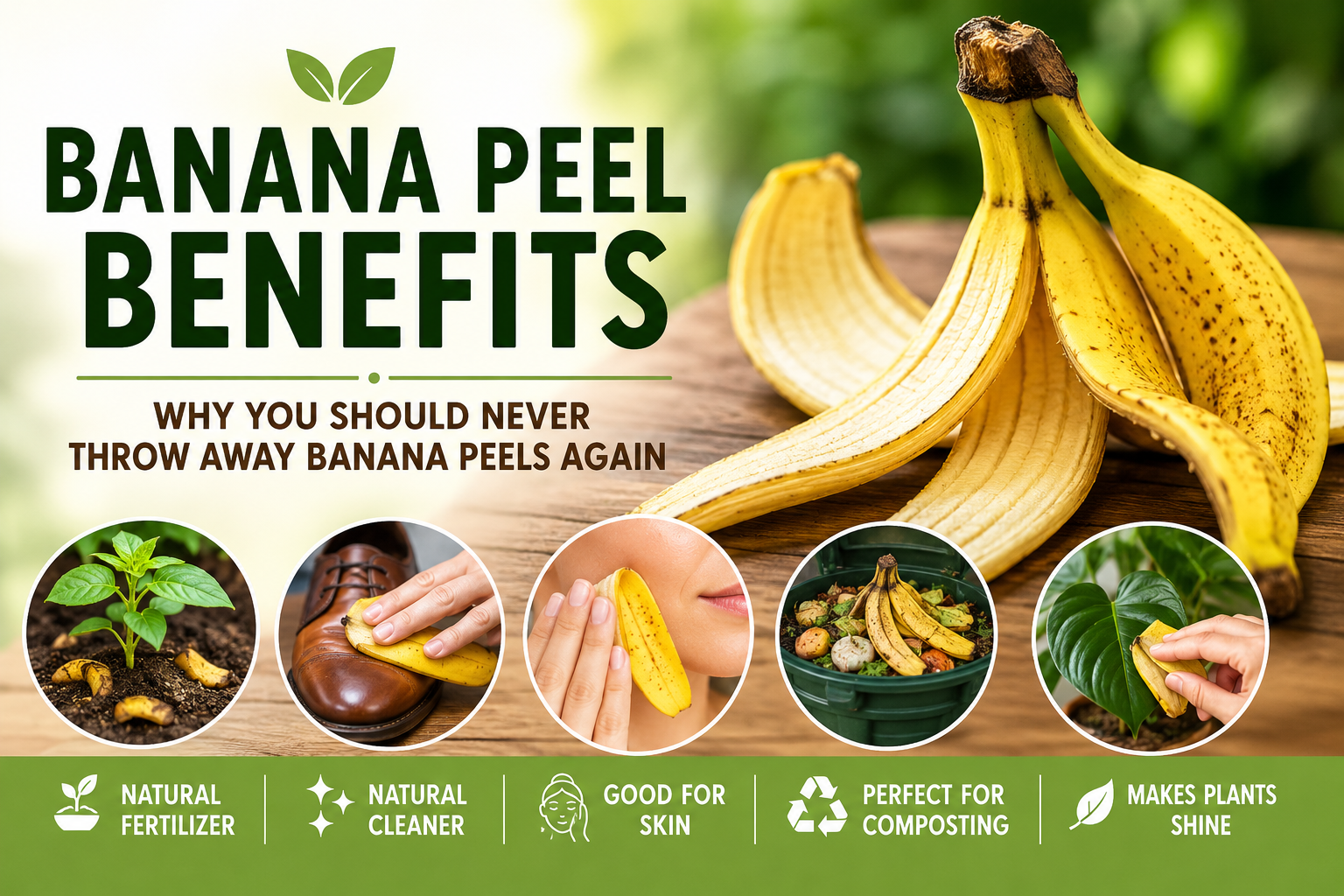
Most people throw banana skins straight into the trash after eating the fruit inside. It’s a habit we rarely question. But those leftover peels can actually be useful in many simple and natural ways around the home.
As more people focus on eco-friendly habits and healthier living, everyday kitchen scraps are becoming more valuable than ever. Banana skins contain natural nutrients, oils, and compounds that can support gardening, cleaning, beauty routines, and sustainable living.
Instead of seeing them as waste, many people are starting to reuse them in creative and practical ways.
They Add Nutrients to Soil Naturally
Gardeners have used leftover fruit skins for years to improve soil quality. Banana leftovers are especially rich in potassium and phosphorus, two important nutrients that support healthy plant growth.
When buried near plants or added to compost, the peels slowly break down and release nutrients into the soil. This helps support stronger roots and healthier flowers, vegetables, and herbs.
Many people use them for:
- Roses
- Tomato plants
- Indoor plants
- Peppers
- Herb gardens
This natural method is an easy alternative to chemical fertilizers and helps reduce kitchen waste at the same time.
Composting Made Easy
If you compost at home, banana leftovers are one of the easiest food scraps to use. Because they break down quickly, they help create nutrient-rich compost for gardens and outdoor spaces.
Composting food scraps helps:
- Reduce landfill waste
- Improve soil quality
- Support eco-friendly living
- Lower household trash
Even small habits like composting can make a positive environmental impact over time.
A Natural Way to Shine Surfaces
The inside of a banana skin contains natural oils that can help polish and clean surfaces gently.
Many people use them to shine:
- Leather shoes
- Plant leaves
- Wooden furniture
- Silver items
Simply rub the inside of the peel onto the surface and wipe clean with a soft cloth. It’s a simple household trick that avoids harsh chemicals and expensive cleaners.
Natural cleaning methods are becoming more popular as people search for healthier alternatives inside the home.
Helpful for Gardening Enthusiasts
People who enjoy gardening often save fruit peels because of their versatility outdoors.
Some gardeners soak banana scraps in water for a few days to create homemade plant water. Others chop them into smaller pieces and mix them directly into garden beds.
Because the peels decompose naturally, they support long-term soil health while reducing unnecessary waste.
For anyone interested in sustainable gardening, this is one of the easiest habits to start.
A Popular Addition to DIY Beauty Routines
Natural skincare trends have increased in popularity over the past few years, and banana skins are often included in homemade beauty routines.
The inner part of the peel contains moisture and antioxidants that may help soften dry areas of skin.
People commonly apply them to:
- Elbows
- Dry patches
- Hands
- Under-eye areas
Others blend small amounts into homemade face masks for a gentle and natural skincare option.
Although they are not miracle products, they can be a simple addition to self-care routines focused on natural ingredients.
Reducing Food Waste Matters
Millions of tons of food waste end up in landfills every year. Many people are now looking for small ways to waste less and use more of what they already have at home.
Reusing fruit scraps is a simple step toward a more mindful lifestyle.
Healthy living is not only about exercise or nutrition. It also includes habits that support sustainability and smarter choices in daily life.
Some Cultures Cook With Banana Skins
While many people are surprised by the idea, banana skins are actually used in cooking in different parts of the world.
When cooked properly, the texture softens and absorbs flavors well. They are sometimes added to:
- Curries
- Stir-fries
- Smoothies
- Vegan recipes
- Baked desserts
Plant-based communities have especially embraced creative ways to reuse food scraps in cooking.
If you decide to try this, washing the fruit thoroughly and choosing organic options is recommended.
They Can Freshen Plant Leaves
Indoor plant lovers often use the inside of banana peels to wipe dust from plant leaves.
This helps leaves appear shinier while removing buildup naturally. The process is simple and avoids sprays filled with chemicals.
It’s a quick trick many plant owners use to keep indoor plants looking fresh and healthy.
A Budget-Friendly Household Hack
One of the biggest benefits of reusing food scraps is saving money. Instead of constantly buying gardening products, cleaning sprays, or expensive beauty treatments, many people are turning toward natural alternatives already available in their kitchens.
Simple habits can reduce waste while lowering household expenses at the same time.
Why Natural Living Continues to Grow
More people are becoming interested in natural living because it encourages simplicity and mindfulness.
Rather than relying heavily on artificial products, people are rediscovering practical habits that have existed for generations.
Small changes, like reusing food scraps or choosing natural solutions, can create healthier routines and reduce environmental impact over time.
Final Thoughts
Something as simple as a banana peel can offer more value than most people realize. Whether used in the garden, around the house, or in beauty routines, these leftovers can support a more natural and sustainable lifestyle.
The next time you eat a banana, think twice before throwing the peel away. Small everyday choices often lead to bigger positive changes over time.


Leave a Reply